
 Diego Villanueva October 24th, 2025 - 11:09 AM
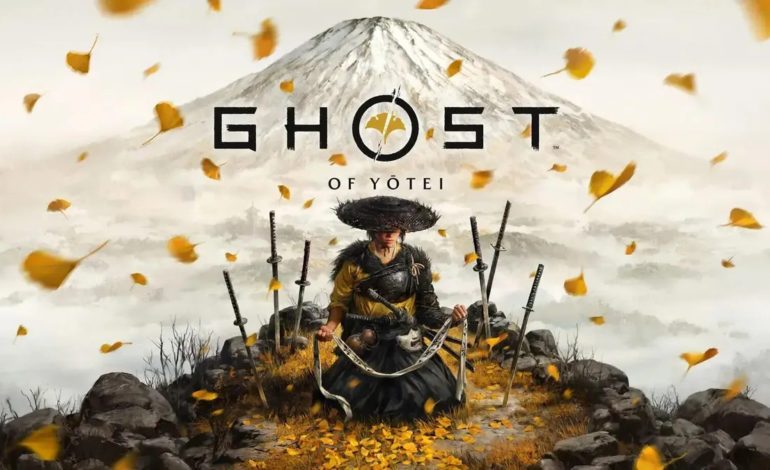
Well, I guess we can all finally accept that Infamous isn’t coming back anytime soon. Sucker Punch has fully embraced being the “Ghost of” studio for PlayStation. Stranger things have happened — Sony let Insomniac make another Ratchet & Clank game — so maybe one day we’ll get a proper Sly Cooper 4. For now, though, we return to the windswept fields and stoic sword duels that define this new franchise. And yes, the internet is already policing its “historical accuracy,” mostly from folks who treat Samurai Champloo like a documentary. I didn’t even notice the hate hive-mind around Ghost of Yōtei until launch season rolled around — but that’s just par for the course with any big AAA release these days. So, the follow-up to the underdog Ghost of Tsushima a surprise Game of the Year contender back then is here. How does it hold up? In short, it doubles down on what fans loved, refines what needed improving, and throws in a few new tricks to keep things fresh.
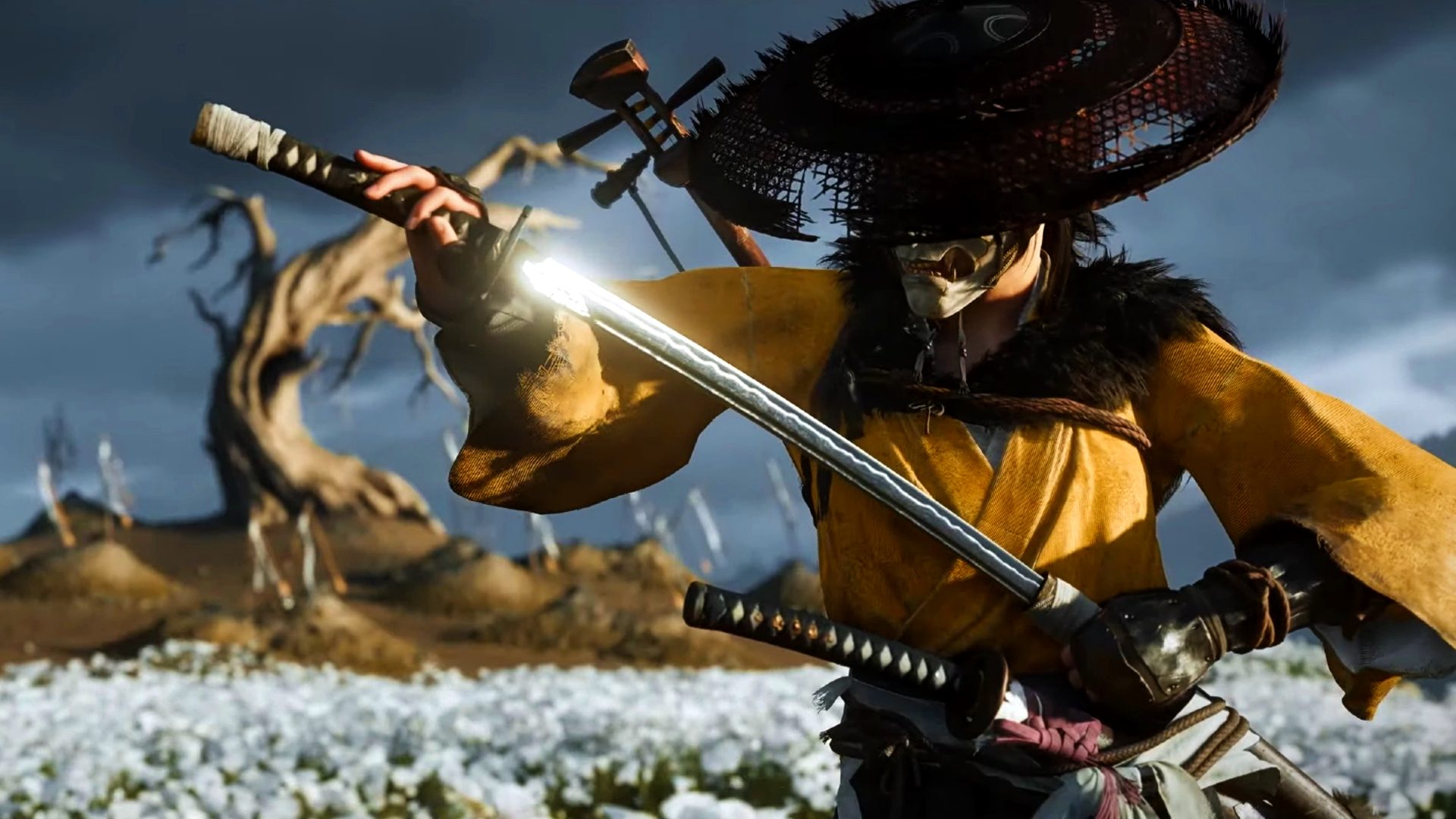
The game jumps forward in time from the 1200s to the 1600s, right around the same era as FX’s Shōgun, trading the humid, bamboo-filled Tsushima for the snow-bitten wilds of Hokkaido. You play as Atsu, the last surviving member of her family after being ambushed and left for dead by the assassins known as the Yotei Six. Your mission is to return home, reclaim your family’s honor, and carve your vengeance into the snow. What immediately stands out about Yotei is how leaner and more cinematic it feels. Gone are the hours of prologue and endless “honor vs. dishonor” debates — this game knows you already earned your samurai stripes. The intro thrusts you straight into a burning village, with Atsu crawling out of a shallow grave as the wind howls around her. The tutorial lasts barely ten minutes before the open world unfolds. Flashbacks fill in her past, but they’re brief, haunting, and never slow the pace. It’s a sequel that respects your time and intelligence, something modern AAA games rarely do. The story itself is smaller but more personal. Where Ghost of Tsushima tells an epic about the soul of a nation, Ghost of Yotei focuses on the ghosts within a single person. Atsu isn’t noble or tragic in the usual samurai sense — she’s angry, cynical, and sometimes downright cruel. The writing leans into that gray morality beautifully. There are moments where villagers fear her more than the bandits she kills, and choices that force you to question whether revenge has truly made her free or just hollow. It’s a tonal evolution that feels natural for the series, bridging Kurosawa-style stoicism with a more character-driven revenge thriller.
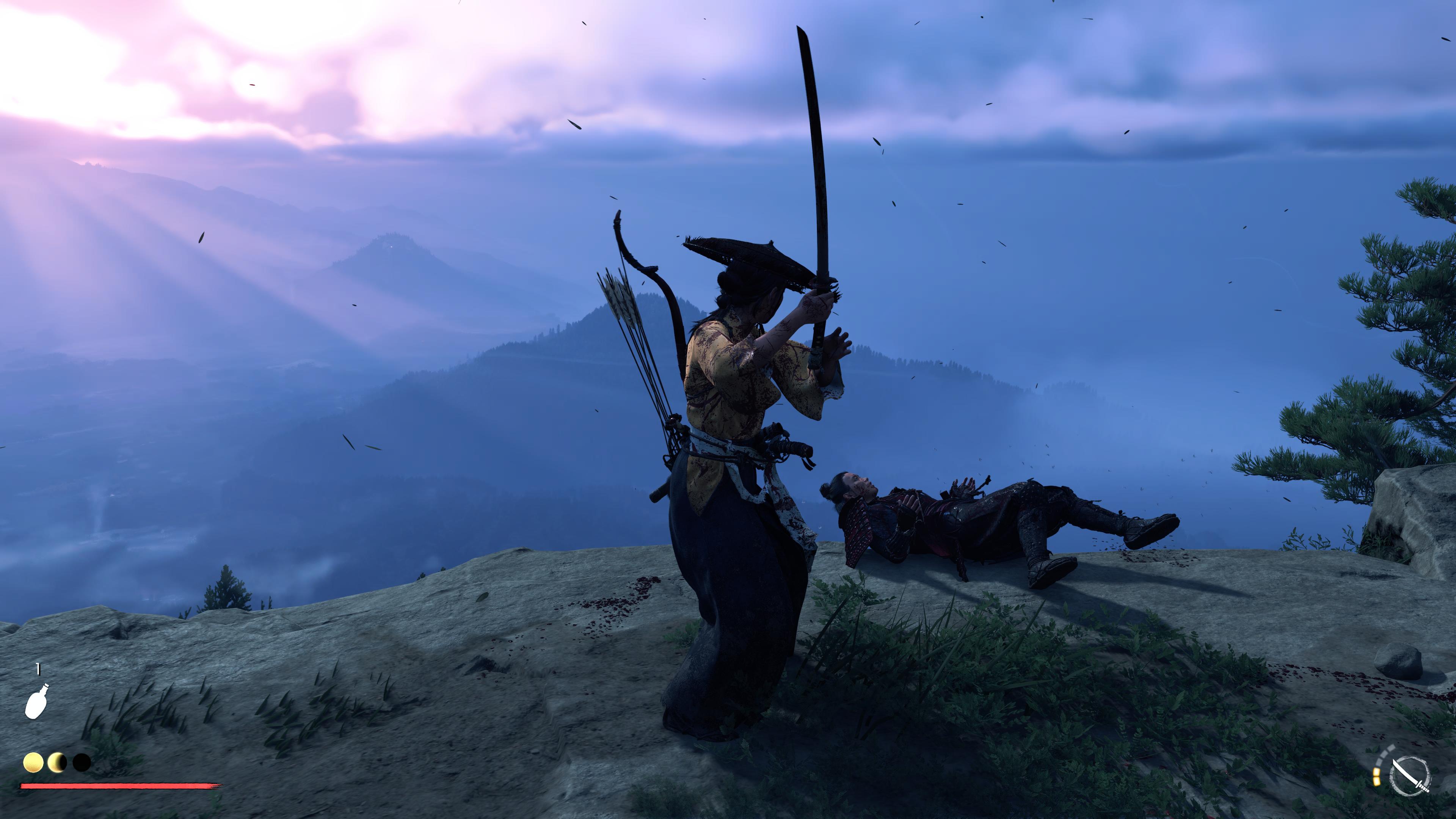
Gameplay follows that same “refine, not redefine” approach. Sword combat is still weighty and deliberate, but smoother and less animation locked. Parrying feels snappier, stealth is tighter, and there’s a new stance system tied to emotional states — Rage, Resolve, and Serenity — that changes both your attacks and dialogue responses. It’s gimmicky on paper, but in practice, it gives fights a rhythm that mirrors Atsu’s mental decline. The stealth kills have also evolved: instead of a simple takedown, Atsu uses poison needles and chain traps inspired by Ainu hunting tools, giving the setting a unique regional flair. Boss fights against the Yotei Six are the game’s highlight. Each encounter feels like a mini film: one takes place during a blizzard inside a collapsing temple, another in a frozen lake that cracks under your feet, and one in complete silence, with only the sound of breathing and snow crunching. It’s theatrical in the best way, and each fight reflects Atsu’s inner turmoil — her fear, guilt, and thirst for vengeance.
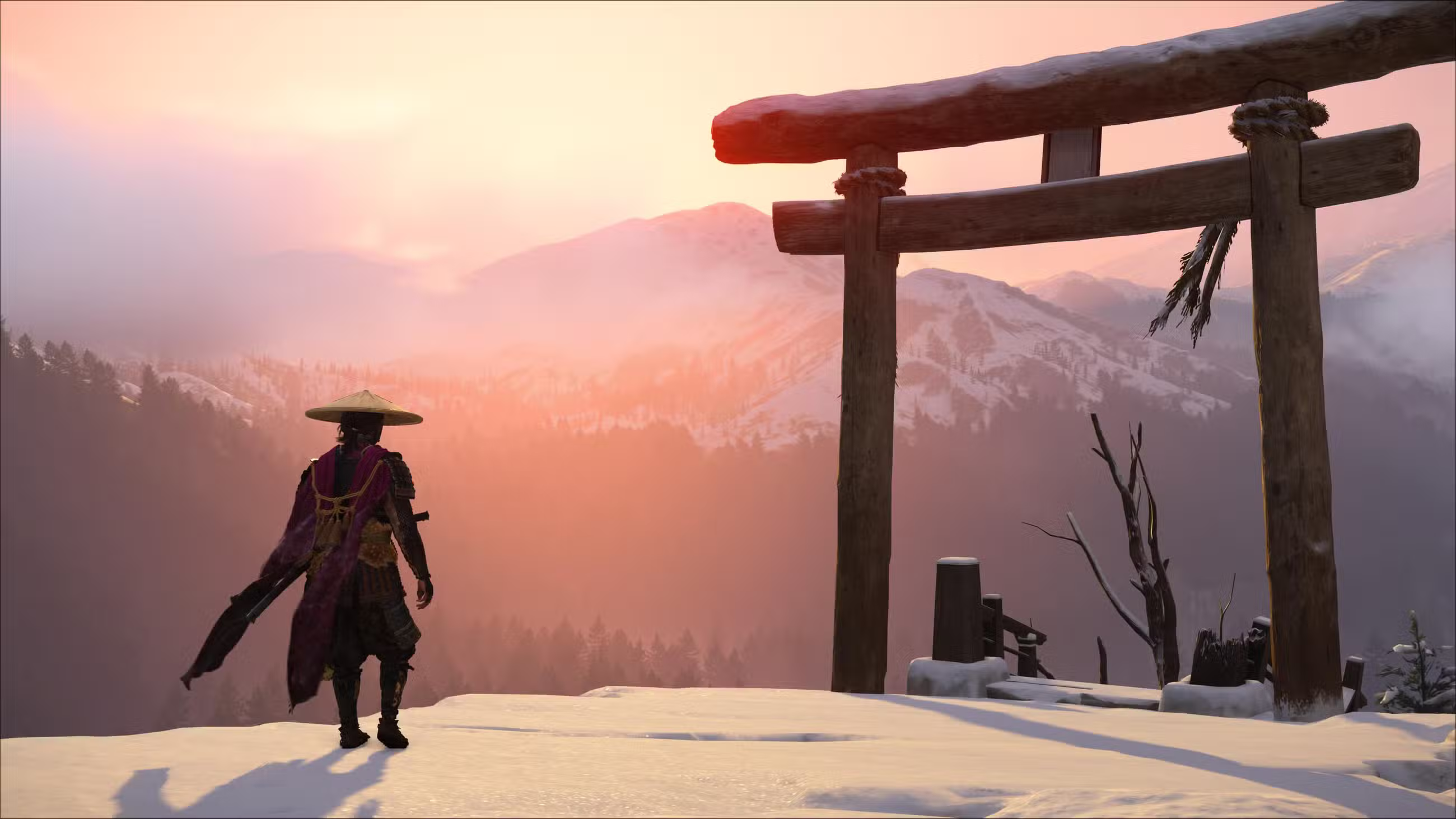
The world design is breathtaking. Hokkaido isn’t just another open map; it’s a painter’s palette of whites, blues, and blood-red leaves. Snowstorms dynamically change visibility, foxes dart across frozen fields, and the soundtrack blends Japanese flute with eerie throat singing. The world feels alive yet somber, like a memory decaying in real time. The new Cinematic Realism Mode lets you play in monochrome with film grain and camera shake, making the game feel like a lost Kurosawa reel unearthed in 4K HDR. Performance-wise, the PlayStation 5 handles it all effortlessly. Fast travel is near-instant, and the DualSense haptics remain some of the best Sony has done — every slash, arrow draw, and footstep through snow has its own subtle vibration. It’s the kind of tactile feedback that makes even standing still immersive.
If there’s one criticism, it’s that Ghost of Yotei still clings a little too tightly to its predecessor’s formula. The map-clearing structure, though smaller, remains familiar: infiltrate camps, free prisoners, upgrade gear, repeat. It’s polished, yes, but predictable. Some might wish Sucker Punch took more risks with structure or tone — maybe leaned harder into the supernatural, since the title practically invites it. A few dream sequences tease this potential, but the game never fully crosses into the realm of folklore, which feels like a missed opportunity. Still, Ghost of Yotei delivers what fans wanted: a more focused, mature continuation that honors Tsushima’s spirit while carving its own icy path. It’s elegant, brutal, and deeply atmospheric. The combat feels better, the storytelling sharper, and the world more soulful. It’s less about the legend of the samurai and more about the burden of survival — what happens after the legend fades and the ghosts remain.
Score: 9 out of 10
Reviewed on PlayStation 5
Play games, take surveys and take advantage of special offers to help support mxdwn. Every dollar helps keep the content you love coming every single day.
