
 Frederick Perdana February 13th, 2026 - 8:04 AM
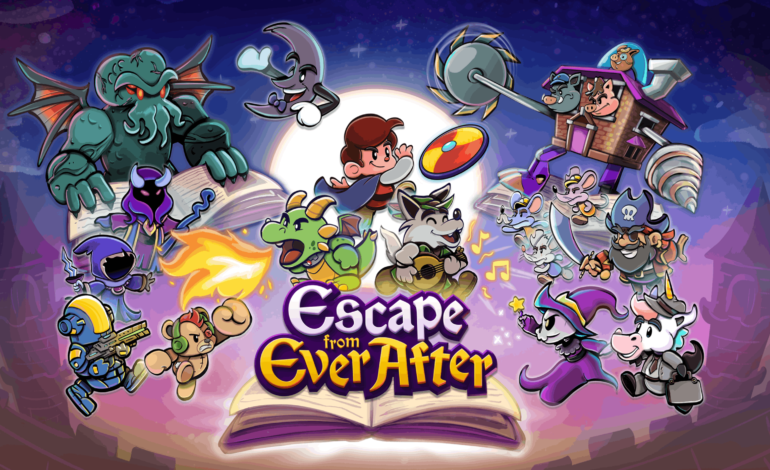
Even if video games are a relatively new artistic medium, there have been design and genre trends that were once widely lauded in their time but are now rarities. People have felt their absence over the years, with corners of the internet clamoring for spiritual revivals of once-beloved games or series. Fortunately, we live in a world where indie developers have taken up the mantle to reinterpret classic games and iterate on their design. Some examples include Songs of Conquest taking notes from Heroes of Might and Magic, Stardew Valley drawing its lineage back to Harvest Moon, and the many Resident Evil and Silent Hill–inspired survival horror games released each year. For fans of Paper Mario: The Thousand-Year Door, Bug Fables filled that niche several years ago, and now Escape from Ever After joins the lineup.
The story follows Flynt Buckler, the protagonist of his own storybook, who enters the castle of his dragon archnemesis, Tinder, with the intent to vanquish her, only to find it taken over by a corporation called Ever After Inc., which is run by other fairy tale characters. He later learns that people in the real world have developed technology that allows them to enter storybooks, and they use it to drain those worlds of resources in pursuit of profit. Unable to take on a corporation himself, Flynt soon meets with a heavily weakened Tinder, and the two agree to team up by hatching a plan to join the company, climb the corporate ranks, and destroy it from within. Along the way, Flynt travels through an array of different stories and encounters characters who eventually join your party.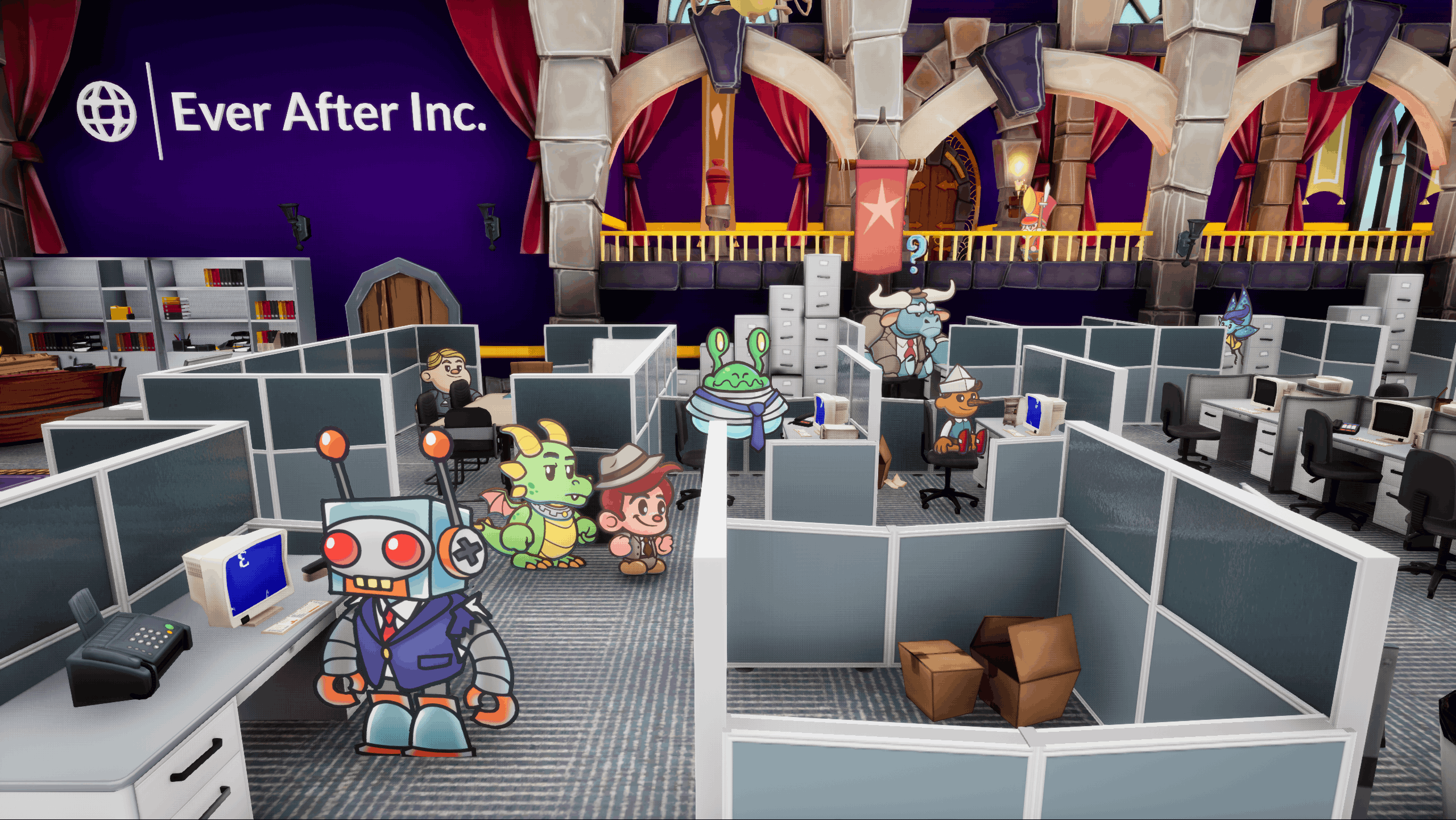
Escape from Ever After proudly wears its influences on its sleeve. Those intimately familiar with Paper Mario: The Thousand-Year Door will feel right at home, as many design elements seem directly lifted from it. Featuring the iconic art style, the core gameplay loop has you traversing a variety of worlds, each offering a mix of combat, puzzles, and exploration. Combat follows a turn-based structure with active elements that require you to time button presses or directional inputs to deal maximum damage. Likewise, when enemies attack, you can time a button press in sync with their animation to reduce or even negate incoming damage. It is a very familiar system for anyone who has played Nintendo’s Mario RPGs.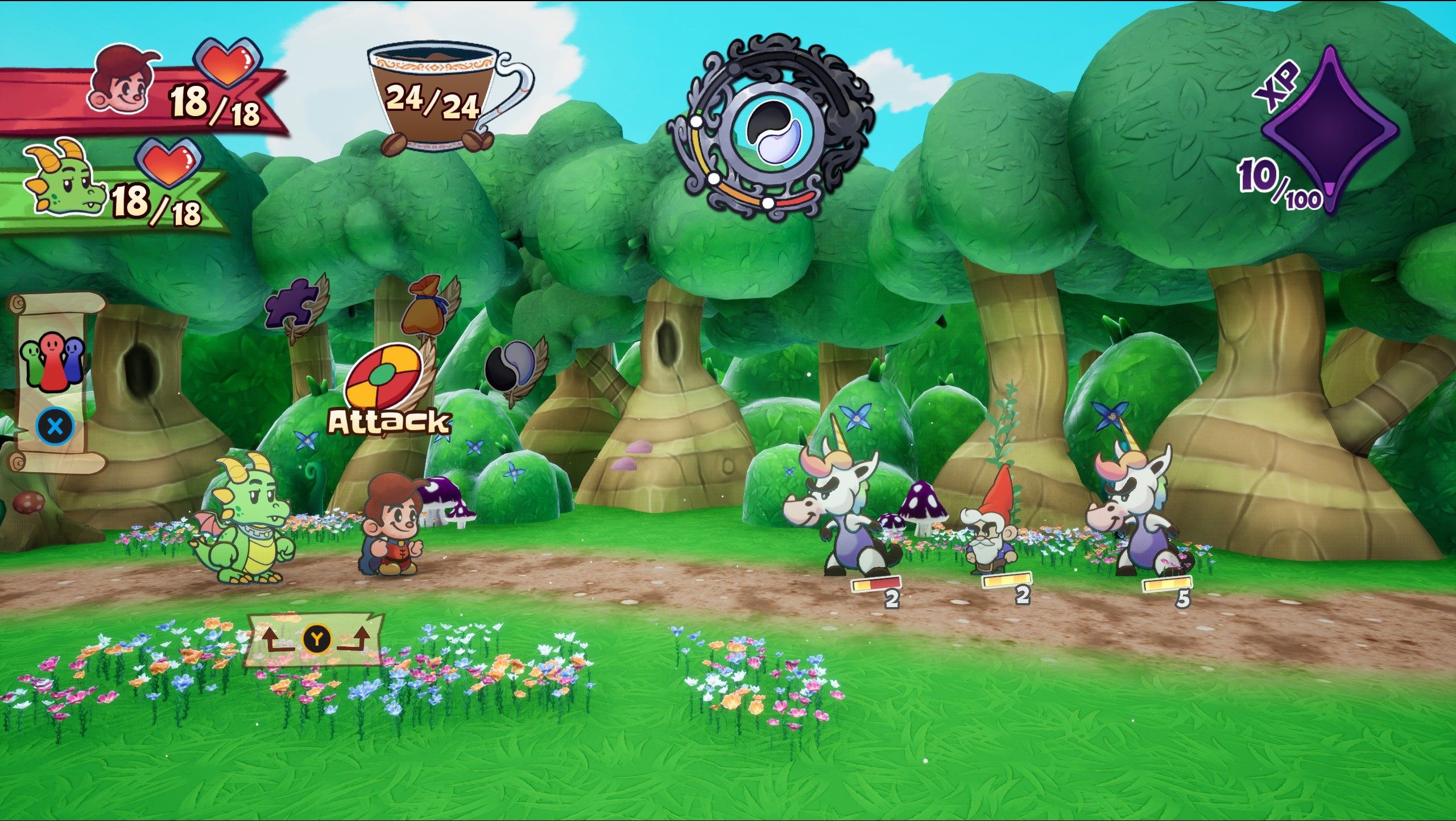
What keeps combat engaging is that each enemy encounter features specific properties that force you to adjust your approach. One enemy may wield a spear pointed forward, preventing the use of Tinder’s fire attack, so you must use Flynt’s buckler throw to disarm them. Another enemy may carry a shield that completely deflects Flynt’s buckler, requiring you to burn it down with Tinder’s fire first. Additional mechanics such as armor and enemy buffs are gradually introduced as you progress through each chapter, allowing combat to remain fresh and engaging throughout the game. Having only one additional party member alongside Flynt, whom you can swap in and out mid-combat, adds further depth to the strategy and decision-making. Outside of combat, you can equip badges that augment your abilities by providing new attacks or utility. Each party member also has unique overworld abilities that help with puzzle-solving and exploration.
Any Paper Mario fan will notice that very little has changed from those classics, so what exactly does Escape from Ever After do differently? Not much, and for some, that may be a dealbreaker. In my experience, however, the game executes its design concepts so well that even if much of it feels familiar, the act of playing remains consistently fun and satisfying. One thing the game absolutely did not need to change is its charm and wit. While the premise of traveling through storybooks is exciting on its own, the individual stories can still surprise you. The first chapter explores the world of the Three Little Pigs, which may give the impression that the game sticks strictly to classic fables and fairy tales, but the second book introduces a completely unexpected setting that had me laughing at the concept and then pleasantly surprised once I saw it play out.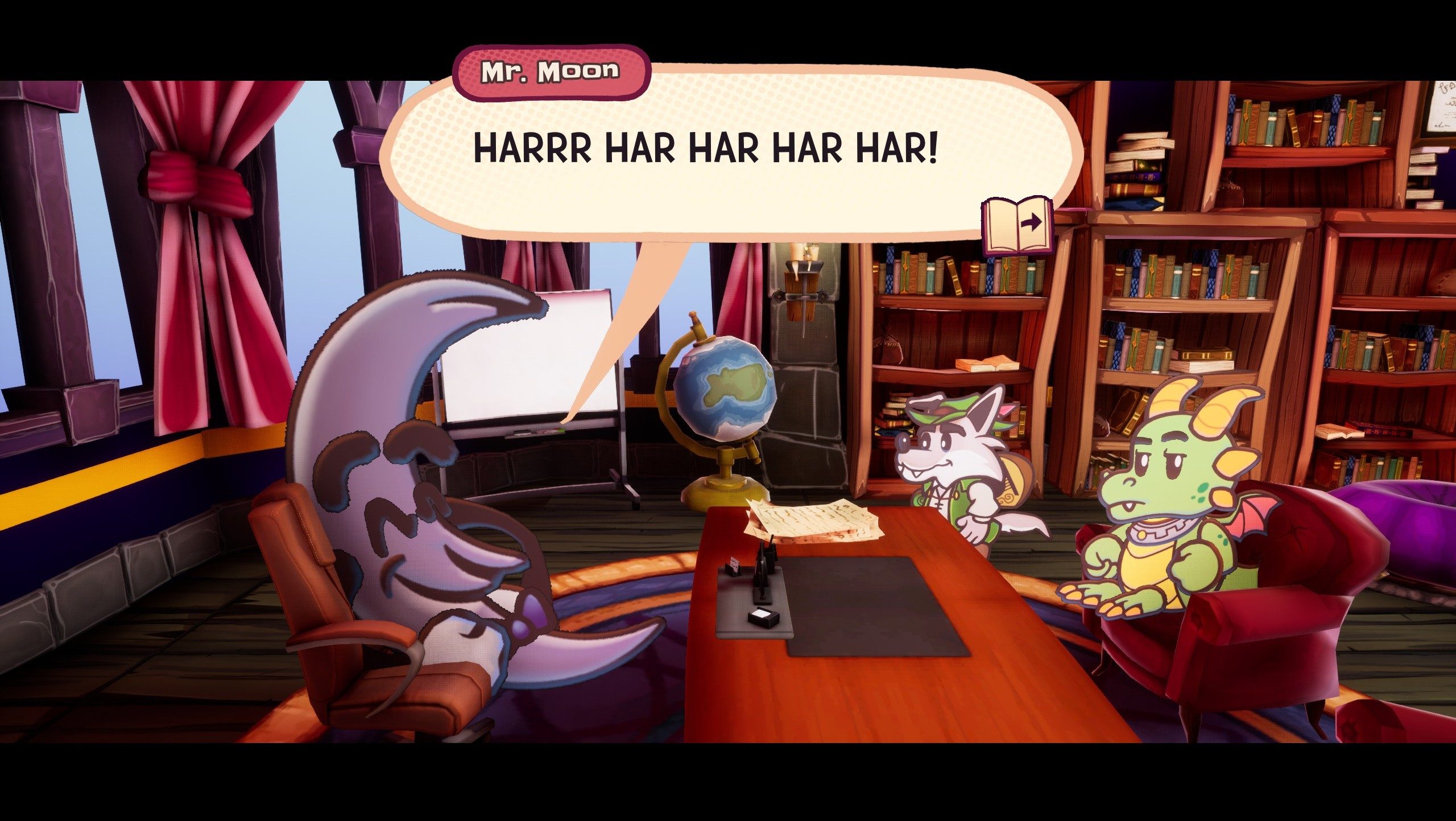
Additionally, several characters are well developed, with Tinder being a standout example. She is self-aware and brutally honest, which leads to genuinely funny comedic moments that had me laughing out loud at her expense. There are also more thoughtful moments, such as one where she questions what it means to be a character in a story written by someone else, and how that affects her sense of agency versus the author’s intentions. If there is one thing I wanted more of, it would be a deeper exploration of this idea, particularly by involving more of the side characters in that conversation. Still, the game is short enough that it never overstays its welcome, taking roughly 20 hours to complete.
If you are someone who aches to relive the exact magic that The Thousand-Year Door provided, you will not find it here, though it comes decently close. If anything, this would be an excellent game to introduce to a younger audience thanks to its simplicity, accessibility options, broad appeal, and design that has held up over the years. There is plenty to enjoy as an adult as well, especially with the sheer number of jokes aimed at corporations. Maybe it can even bring back a bit of that childlike wonder. It certainly did for me.
Score: 8 out of 10
Reviewed on PC
Play games, take surveys and take advantage of special offers to help support mxdwn.
Every dollar helps keep the content you love coming every single day.
