
 Diego Villanueva June 30th, 2025 - 4:00 AM
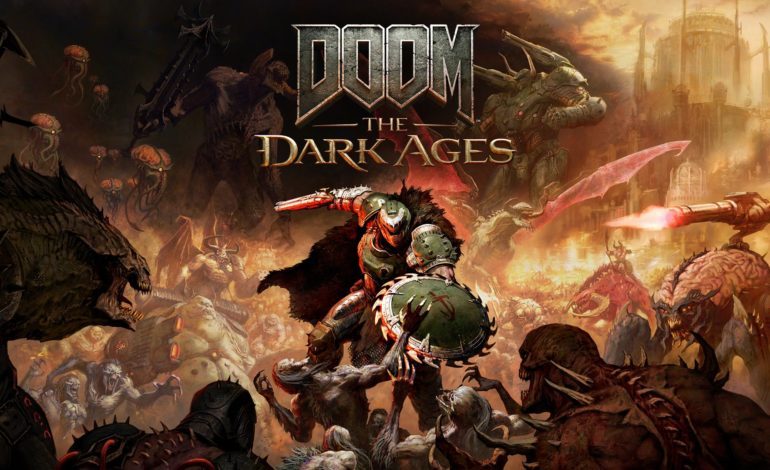
It’s honestly remarkable how Doom continues to evolve and stay relevant, nearly 30 years after its original release shook the gaming world. What started as a pixelated, demon-slaying power fantasy in 1993 has grown into a genre-defining franchise that refuses to fade away. In fact, it’s not just surviving, it’s thriving. After giving the first-person shooter genre, the adrenaline shot it desperately needed in the 2010s, especially during a time when military sims like Call of Duty were running the show, Doom managed to carve out its own blood-soaked lane once again. Now we have arrived at the third entry in this new trilogy of Doom games, with The Dark Ages, that finds a great mix between what worked in Doom 2016 and Doom Eternal. But this time, things feel different. Very different. The Dark Ages shifts the setting from techno-hellscapes and Martian laboratories to a brutal, medieval-inspired nightmare of castles, cathedrals, and corrupted kingdoms. It’s a bold aesthetic pivot that could have easily fallen into gimmick territory—but id Software commits fully to the vision, and the result is an experience that feels fresh without betraying what makes Doom so much like Doom.
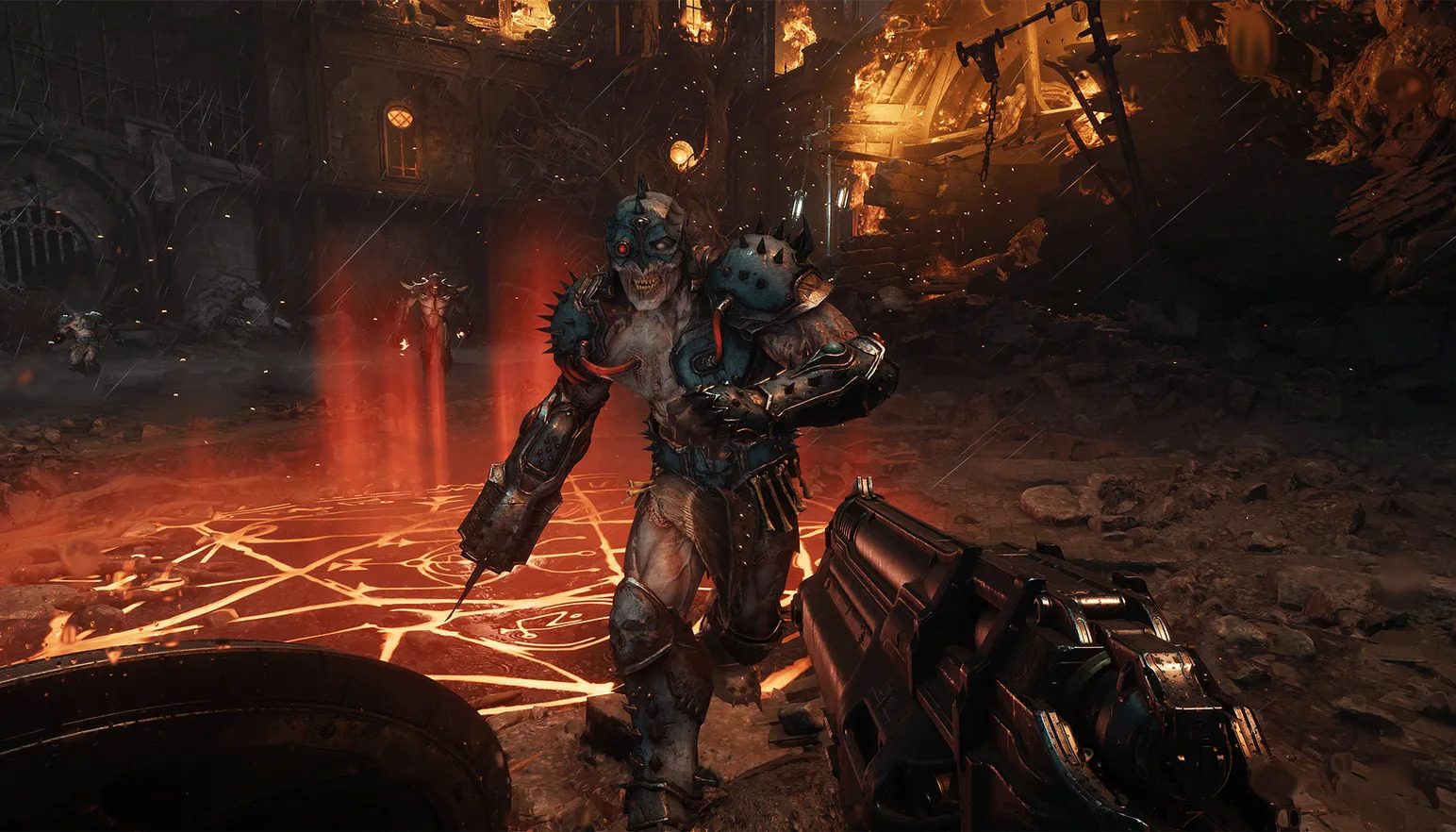
The first thing that hits you is the visual tone. Where Doom Eternal was a sensory overload of neon lights and techno-metal UI, The Dark Ages is grimy, heavy, and grounded. The environments are drenched in stone, ash, iron, and blood. This isn’t fantasy in the high magic sense—it’s brutalist medieval horror, like if Berserk and Quake had a baby raised on heavy metal album covers. The world design leans hard into gothic architecture, grotesque statues, and sprawling citadels under siege, giving every arena a sense of foreboding scale. It makes combat feel like you’re not just surviving waves of enemies but actually battling through cursed history.
Combat, of course, is still the star of the show. That signature Doom rhythm—aggression, mobility, resource juggling-is still here, but it’s been recalibrated. If Doom 2016 was a comeback and Eternal was an escalation, The Dark Ages is a distillation. You’re not flying around the map like a caffeinated ninja anymore. Movement is a little more grounded, jumps are weightier, and the game encourages holding your position more often, without ever feeling slow or sluggish. It’s a subtle but smart shift, matching the heavy tone of the setting and allowing for more deliberate, tactical decisions. The weapon lineup embraces this new atmosphere, too. Sure, you’ve still got your combat shotgun, but now it’s forged from bone and steel. The classic chainsaw is back, reimagined as a massive, gear-driven execution tool. The biggest twist, though, is the addition of a massive flail and shield combo, turning the Doom Slayer into a full-on medieval juggernaut when the time calls for it. The flail isn’t just a melee gimmick—it’s central to some of the game’s most intense crowd-control moments, letting you swing through swarms of demons in a way that feels raw and personal. Meanwhile, the shield adds a layer of timing and counterplay that Doom hasn’t really explored until now.

This expanded combat variety keeps fights feeling fresh, even for veteran players who mastered the previous titles’ flow. The glory kills return, of course, and they’re more brutal than ever—less surgical, more savage. There’s a new emphasis on mid-range combat tools as well, like explosive crossbows and incendiary javelins, encouraging players to rethink positioning and threat prioritization. And yes, the game still absolutely punishes players who play passively. The health-armor-ammo triangle still defines the pace, but it’s tuned to reward brawling over bunny-hopping. Enemy variety also benefits from this shift in setting. Instead of just demons with glowing weak points, you now face corrupted knights, necromancer priests, and hulking monstrosities in plate armor. Many enemies now carry shields of their own, forcing you to time your attacks or use specific weapons to break their guard. Some even have siege weapons mounted to their backs. The designs are grotesque and intimidating, and they bring a renewed sense of dread to encounters that had started to feel a little routine in Eternal’s later stages.
Narratively, The Dark Ages leans more into myth than sci-fi. While previous entries sprinkled in lore through codex entries and holograms, this installment fully embraces a grim legend structure, telling the story of the Doom Slayer as a feared figure in an age long before Mars and UAC ever existed. There’s a sense of tragic inevitability running through the campaign—of kingdoms that fell under the weight of demonic corruption and a lone warrior fighting not to save the world, but simply to break the cycle. It never bogs down the action, but it adds just enough flavor to make the world feel lived-in and doomed. One of the more surprising additions is the new dragon-like mount sections, which break up the combat arenas with large-scale traversal and destruction. They’re a bit more scripted than the rest of the game but offer just enough spectacle to feel earned. Think Panzer Dragoon with a medieval filter. It’s a risk—one that could’ve derailed pacing—but the developers mostly pull it off with style and restraint.

As for the visuals, the game runs beautifully on current-gen hardware. Performance is fluid even in the most hectic encounters, and the art team has done an exceptional job of creating atmospheric lighting and dense texture detail without sacrificing clarity. Every frame could be a death metal album cover, and that’s not a complaint. Mick Gordon may not return for the soundtrack, but the new composer channels a similar energy—rumbling percussion, wailing strings, and distorted choirs fill the void, creating a soundscape that feels ancient and feral instead of just industrial. If there’s a downside to The Dark Ages, it’s that the game occasionally leans a little too hard into its tone. Some of the environments, while stunning, can start to blur together visually, and the slower movement might turn off players who adored the aerial acrobatics of Eternal. A few of the new mechanics—like the directional shield blocks or flail charging—aren’t always explained well and can result in some frustrating trial-and-error early on. But these are minor cracks in an otherwise rock-solid suit of demon-slaying armor.
So, in the end, is this worth your time? Yes, full stop. Doom: The Dark Ages is a confident, heavy-metal reinvention. It understands what made Doom special from the beginning: momentum, violence, and presence. But it also recognizes that innovation doesn’t mean abandoning the core. Instead, it reshapes that core into something ancient and powerful, giving players not just another Doom game, but a Doom myth. This is Doom as dark fantasy. This is Doom with chainmail, fury, and a sense of inevitability. And somehow, nearly three decades in, it still rips and tears like nothing else.
Score: 9 out of 10
Reviewed on Xbox Series X
Play games, take surveys and take advantage of special offers to help support mxdwn.
Every dollar helps keep the content you love coming every single day.
