


Well, if there is one genre we are starting to see an overabundance of, it is the “rogue-blank” genre. Ever since the mid-2010s, we have seen numerous games take the concept of “every single time you play, it’s a different experience.” But then Hades came out in 2020, and that’s when everything seemed to speed up, with bigger games coming out in a similar vein, like Deathloop and Returnal. So now, here is another one to throw onto the pile: Ascend to ZERO. At first glance, it looks like it plays similarly to Returnal but with the isometric camera setup from Hades. After playing it for around 15 hours, yeah, that is exactly what it felt like, but I say that not in a negative way. Ascend to ZERO is a game that clearly knows what kind of experience it wants to provide. You run through different areas, fight increasingly large groups of enemies, collect upgrades, and try to survive long enough to make it to the end. It is a formula we have seen plenty of times by now, but that doesn’t automatically make it a bad one. Sometimes a game can be familiar and still be enjoyable, and that is pretty much where I landed with Ascend to ZERO.
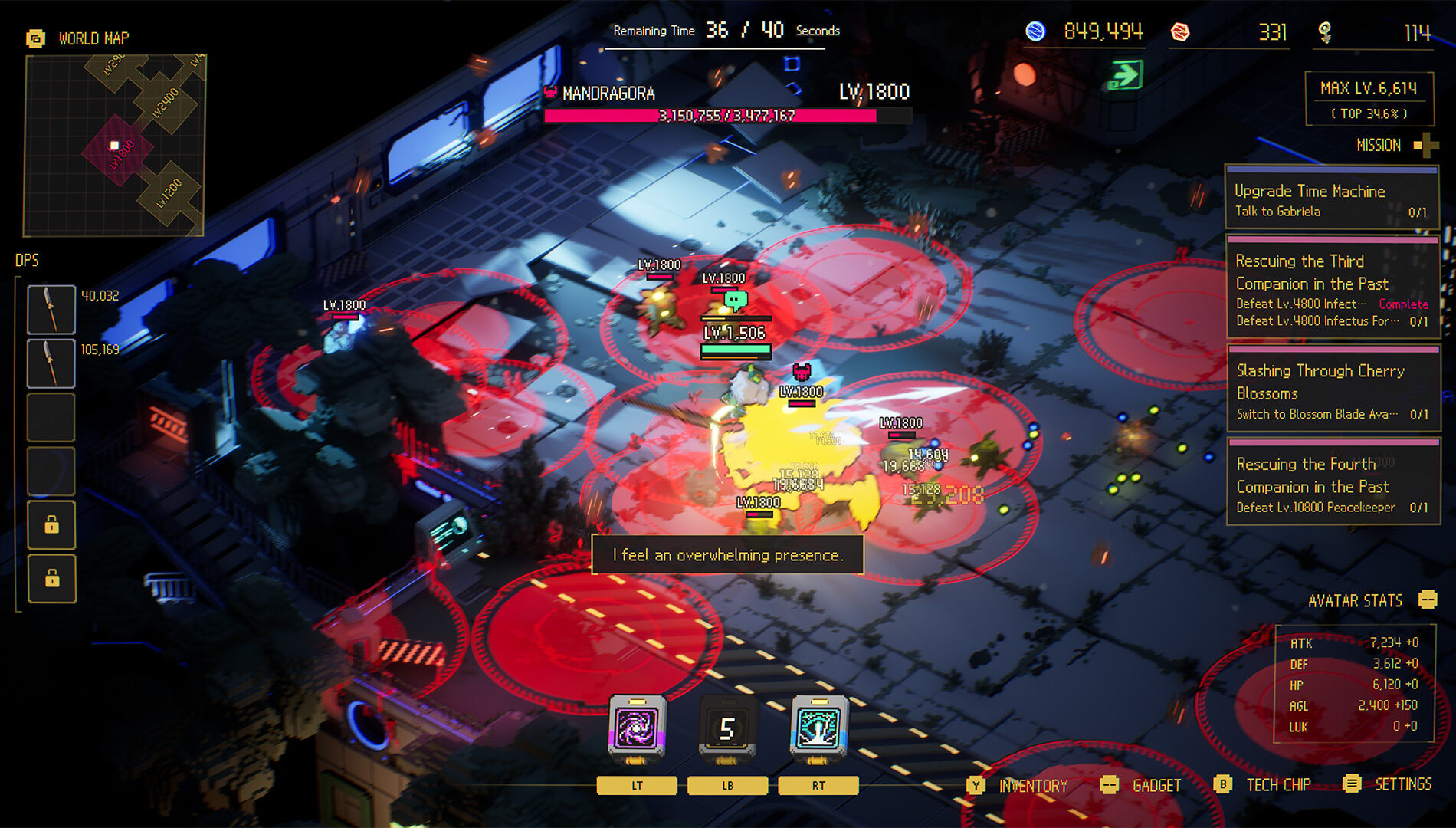
Where the game really starts to work is in its combat. There is a nice sense of speed to everything, with enemies constantly coming after you and forcing you to keep moving. One second, you can be clearing out a group of smaller enemies, and the next, you have a much larger threat coming toward you while the screen is filled with attacks. It gives the game a nice rhythm because you are rarely just standing around waiting for something to happen. The time-manipulation abilities are also a nice touch and probably the mechanic that gives Ascend to ZERO the most personality. Being able to slow down or stop time gives you an opportunity to catch your breath when things become chaotic, while also allowing you to set up attacks that would otherwise be much harder to pull off. It is a simple idea, but it works well within the game’s combat system. There is also a satisfying feeling when your character starts becoming more powerful during a run. At first, enemies can feel overwhelming, but after picking up the right combination of upgrades, you can suddenly start tearing through them. Those moments are when the game is at its best, because you can actually feel your build coming together rather than simply watching numbers go up.
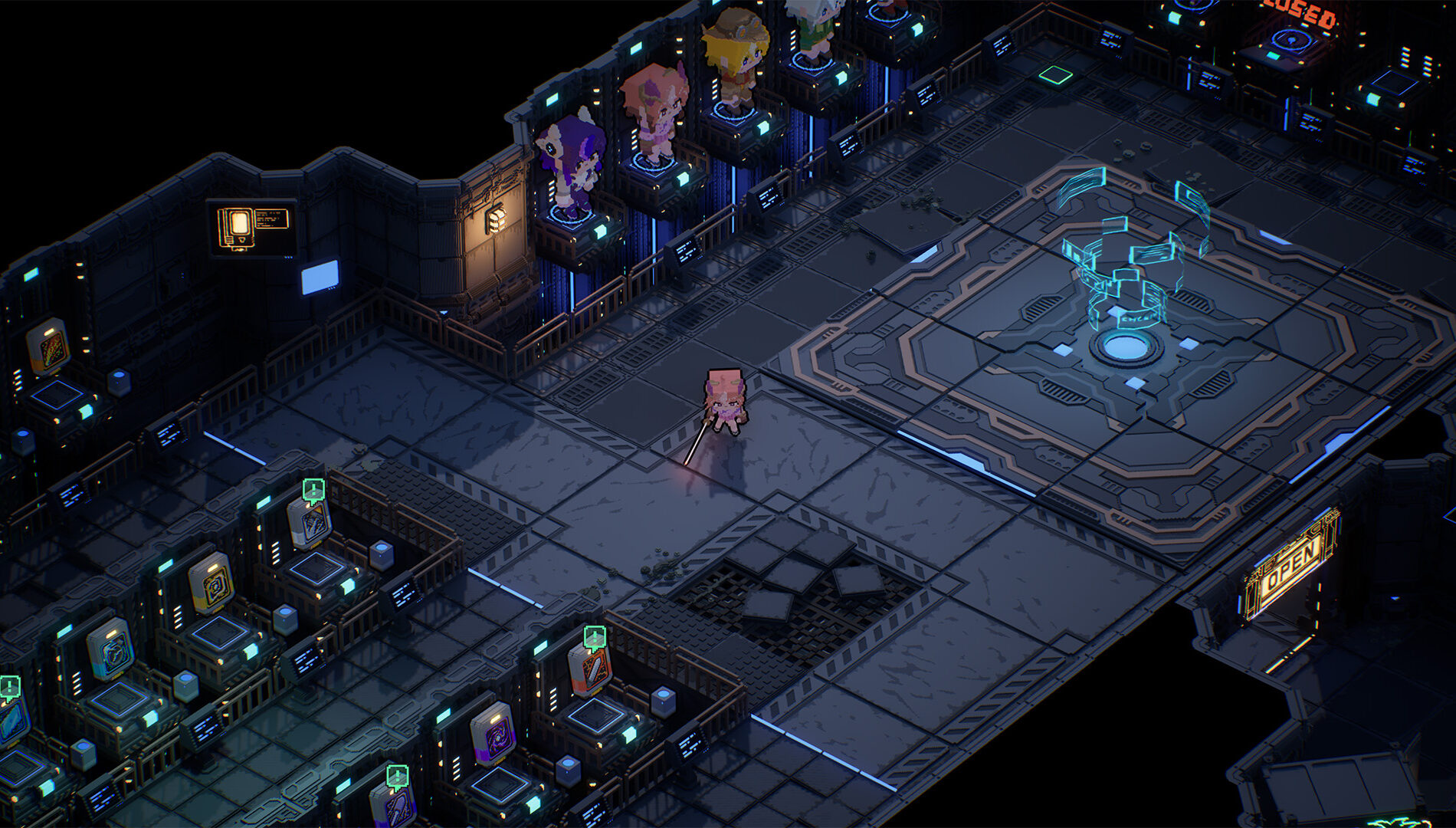
The problem is that the longer I played, the more I noticed how much of the experience depends on that initial appeal. The first few hours are probably the strongest because you are still learning the systems and figuring out which upgrades work together. Once you understand how everything fits together, however, the formula becomes much easier to predict. Some runs can be incredibly satisfying when you get a strong combination of abilities, but other runs can feel like you are simply going through the motions. This is where the roguelike structure can work against the game. Replaying an area is supposed to be exciting because of the possibility of getting a different build, but that only goes so far when the underlying encounters remain familiar. I also found myself wishing there were more meaningful reasons to experiment. There are plenty of upgrades and abilities, but not all of them feel equally useful, which can lead to certain choices feeling like obvious picks while others are left behind. It is not a broken system by any means, but it lacks the kind of depth that makes you want to spend dozens upon dozens of hours mastering every possible combination.
Visually, Ascend to ZERO does a respectable job of creating a futuristic world that fits its combat. The isometric perspective works particularly well when the screen becomes crowded, since you can see enemies approaching from different directions without constantly adjusting the camera. The environments also have enough variety to prevent everything from blending together, although I would not say the game’s presentation is something I will remember years from now. The same goes for the story. There is enough there to give the player an idea of what is happening and why they are fighting, but the narrative never became the reason I wanted to continue playing. That isn’t necessarily a problem, since gameplay is clearly the priority, but it does mean there isn’t much beyond combat to hold the experience together. After about 15 hours, I felt I had a pretty good understanding of what Ascend to ZERO was offering. I enjoyed my time with it, but I did not have the same urge to immediately start another run that I have had with some of the genre’s best games.
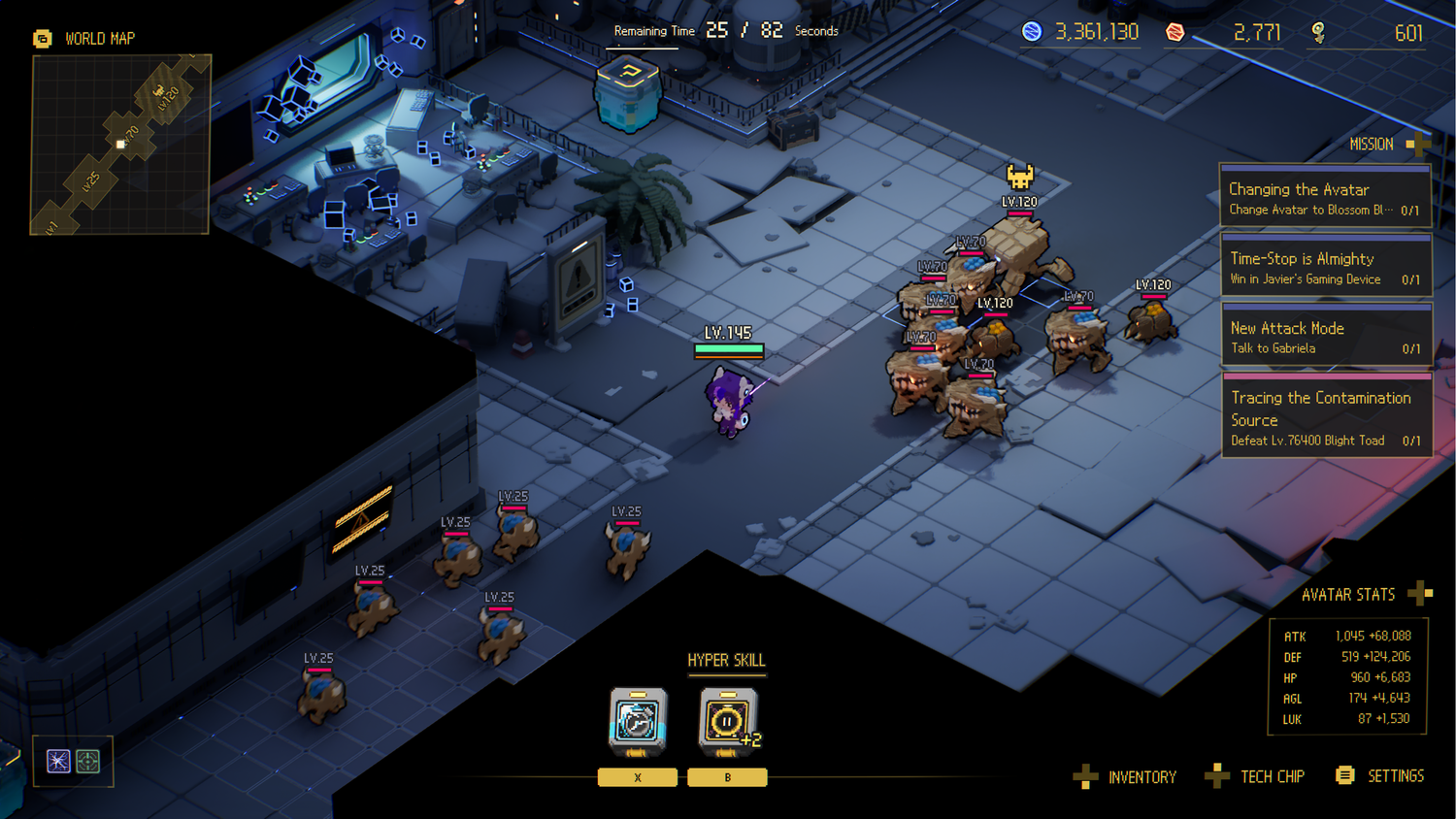
And that ultimately sums up my biggest problem with Ascend to ZERO: it is a good game arriving in a genre where “good” is becoming harder and harder to recommend on its own. The game has solid combat, an interesting time mechanic, enjoyable character progression, and enough content to make the experience worthwhile, but it never quite reaches the point where I would call it essential. Hades has its characters and story, Returnal has its atmosphere and brutal third-person combat, and even the many smaller roguelikes out there often have one strange or memorable idea that makes them immediately recognizable. Ascend to ZERO has the time mechanic, but I don’t think it pushes that idea far enough to completely separate itself from the crowd. Still, I wouldn’t tell people to skip it. If you enjoy roguelikes or bullet-heaven games, there is plenty here to have a good time with, and getting a powerful build while the screen fills with enemies can be incredibly satisfying. It just feels like a game that I enjoyed rather than one that I will remember. Ascend to ZERO is a solid addition to an already crowded genre, but ultimately, I think it needed a little more ambition to reach the next level.
Score: 7 out of 10
Reviewed on Xbox Series X & Rog Ally
