
 Julian Ebert March 16th, 2026 - 10:19 PM
PC Gamers have had access to some nifty technology from Nvidia since the launch of their 2000 series GPUs in 2018. Over the years, larger titles have only gotten more taxing to run as developers have taken advantage of improved graphics tech like raytracing and global illumination, but Nvidia has provided several ground-breaking features in their consumer hardware to tackle this. One of these is DLSS, or Deep Learning Super Sampling, and it has been at the forefront of the tech giant’s performance enhancing tools they’ve implemented in their graphics cards recently. It gives players better framerates by decreasing the resolution the GPU has to render at, then upscaling that using a machine learning algorithm to make up for the lost pixels. And besides the drawback of an occasionally more blurry image, it can be a pretty seamless upgrade to a smoother gaming experience. Earlier today, Nvidia unveiled that latest iteration of this, DLSS 5, will release later this fall, and championed it as “the company’s most significant breakthrough in computer graphics since the debut of real-time raytracing.”
Announcing NVIDIA DLSS 5, an AI-powered breakthrough in visual fidelity for games, coming this fall.
DLSS 5 infuses pixels with photorealistic lighting and materials, bridging the gap between rendering and reality.
Learn More → https://t.co/yHON3nGyxE pic.twitter.com/UvF9G7tlZs
— NVIDIA GeForce (@NVIDIAGeForce) March 16, 2026
According to Nvidia, DLSS 5 is unique from its predecessors in its usage of AI. Whereas previously the tech would merely interpolate pre-existing visual data, this iteration goes the extra mile to add “photoreal” lighting and details to a game’s imagery where there wasn’t any. Essentially, it’s like adding an enhancement filter from Instagram or Snapchat to nearly every frame of a game. That’s dumbing it down a lot, but the point is that DLSS 5 infuses games with an arguably subjective increase in quality as opposed to an objective preservation of it.
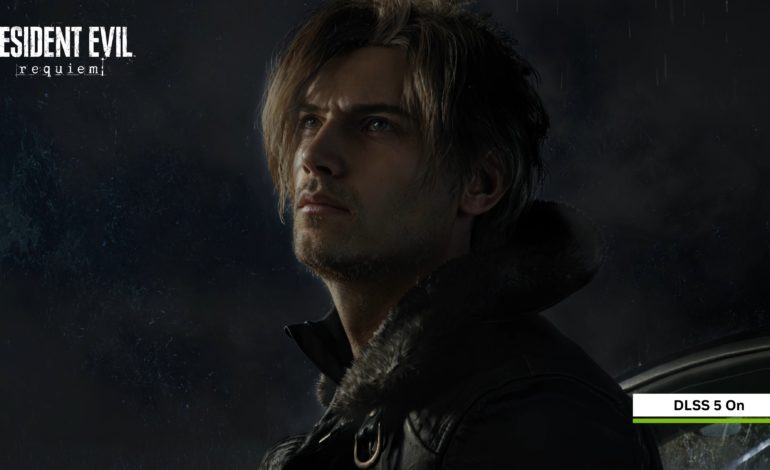
Developers will have control over certain aspects of how the AI generates this quality pass, so it’s not likely that Nvidia will wrest away the creative integrity of a game’s art team, however this DLSS model is definitely an unprecedented shift in approach to computer graphics. It should be clarified that this AI model, unlike OpenAI’s ChatGPT or Anthropic’s Claude, operates completely offline with a pre-trained dataset, so rest assured, users’ GPUs won’t be querying several data-center’s worth of visual prompts with DLSS 5 enabled. In the many comparison photos the company provides on the announcement page, characters from Starfield, Resident Evil Requiem, Fifa, and other recent titles are shown with a somewhat surreal enhancement of their features. In one image, moving the comparison slider reveals new wrinkles and creases on Leon Kennedy’s brow; his stubbled jowls grow texture and are silhouetted more prominently by backlight; and you can almost see the divots of all of his individual pores on his face. Whether or not that’s an improvement, is debatable, however, as not every “realistic” game necessarily aims to look like an 8k photograph all the time.
Some users on X seem dissuaded by this as well, negatively labeling the tech as an “AI slop filter” or otherwise asserting skepticism about performance costs. With the broader public growing increasingly frustrated with AI, it will be interesting to see how DLSS 5’s roll-out unfolds, and whether it will inspire the same awe that raytracing has in the gaming community.
Play games, take surveys and take advantage of special offers to help support mxdwn.
Every dollar helps keep the content you love coming every single day.
