

Disclaimer: Product provided for review by Square Enix
In the past decade, JRPGs have experienced a Western resurgence not seen since the late ’90s, when Final Fantasy VII was released. The difference now is that the renewed attention hasn’t gone to the biggest names, but to the once-niche corners of the genre. With this spotlight comes a curious side effect: publishers, suddenly aware of new expectations, seem increasingly hesitant to take risks. Instead of new entries, we’ve been handed a steady stream of remakes and remasters. At this point, Persona 6 is starting to feel like the JRPG equivalent of Half-Life 3. We know it’s coming, but every announcement that isn’t it only fuels collective impatience. Square Enix is no exception. Since the breakout Western success of Dragon Quest XI in 2018, we’ve seen lavish remakes of the original NES trilogy and now a full Unreal Engine reimagining of Dragon Quest VII, originally a PlayStation 1 epic. I had never actually played Dragon Quest VII before this. My only exposure was a brief encounter with the 3DS demo years ago, so I went into this version almost completely blind. What I did know was that this remake was positioned to appeal to the wave of players who entered the series through Dragon Quest XI. After roughly 100 hours with the game, about 70 of those courtesy of being snowed in during the Great American Ice Age of 2026, I can confidently say this is a comforting, slow-burn, back-to-basics RPG in a way modern JRPGs rarely are. 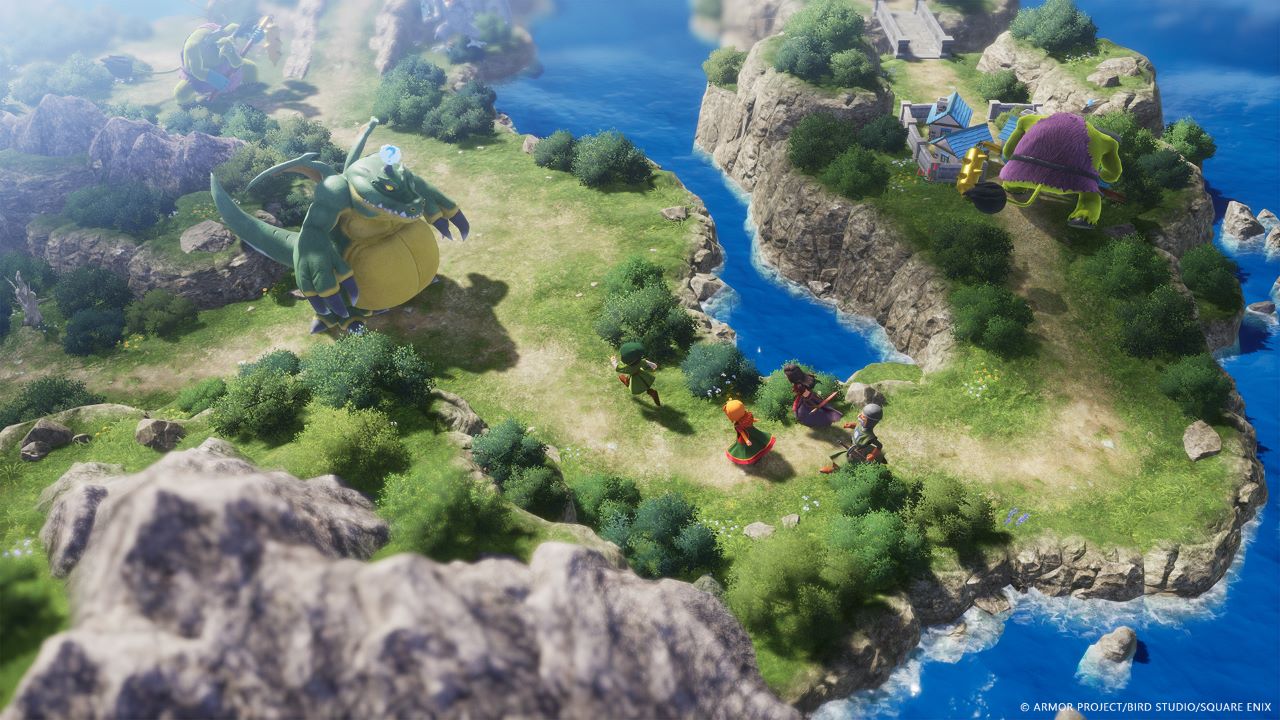 What defines Dragon Quest VII more than anything else is its patience. Modern JRPGs are often terrified of losing the player’s attention, front-loading spectacle, combat systems, and narrative hooks within the first hour. Dragon Quest VII famously takes hours before the first real battle occurs. Instead, it asks the player to explore ruins, solve environmental puzzles, and piece together a mystery through stone tablets and quiet observation. In another era, this might have been criticized as an archaic design. In 2026, it feels almost rebellious. The game’s structure is episodic. Each island you restore functions like a short story, complete with its own characters, conflicts, and moral tensions. Some are tragic, some are humorous, and some are surprisingly dark in ways that feel more akin to folklore than fantasy epics. You rarely return to these places after resolving their central problem, which gives the world a strange, fleeting quality. You are less a hero on a grand quest and more a traveler passing through others’ lives. This pacing creates an unusual emotional rhythm. There are long stretches of calm exploration punctuated by bursts of drama, followed again by quiet travel. The effect is meditative. Rather than pushing you forward with urgency, the game invites you to settle into a routine. Wake up, solve a village’s problem, and move on. It’s closer to reading a collection of fables than following a tightly plotted narrative arc.
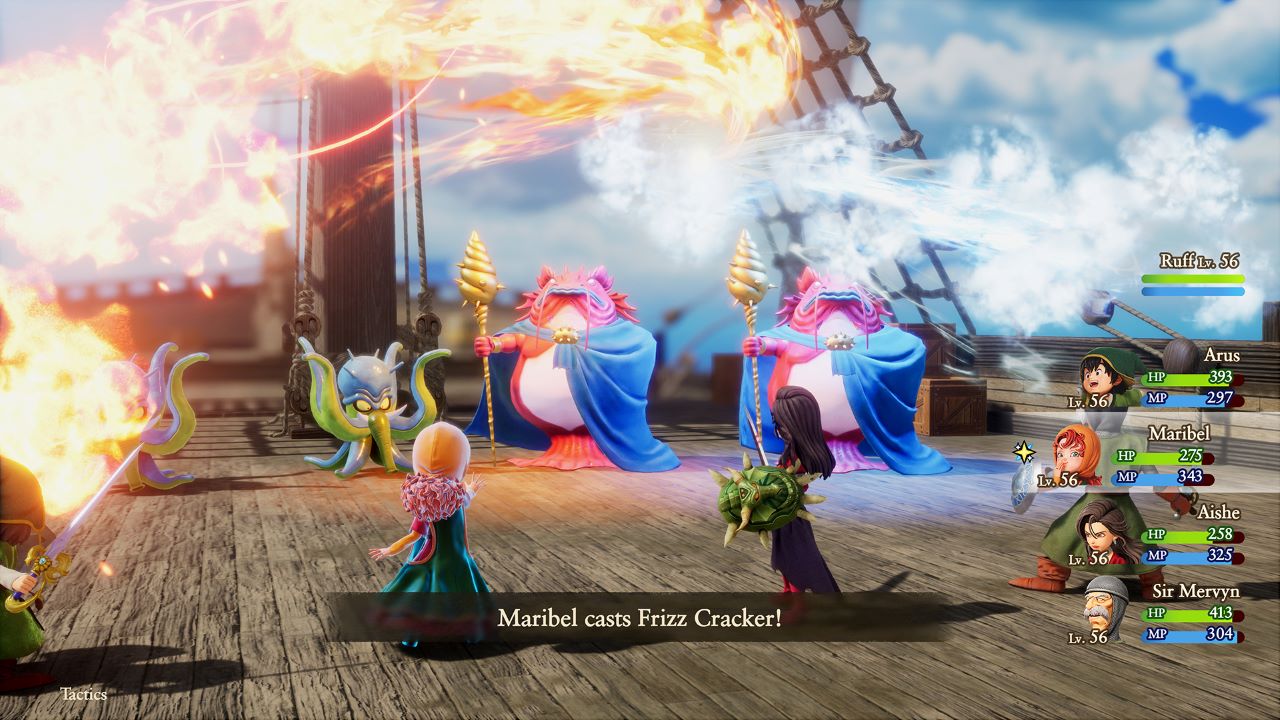
Combat, when it finally becomes regular, is comfortingly traditional. Turn-based battles unfold without gimmicks, relying on careful resource management and the gradual development of the game’s vocation system. The class system is where much of the long-term engagement lies, allowing characters to mix and match roles in ways that reward patience and experimentation. It’s not flashy, but it is deeply satisfying in the slow, methodical way that older RPG systems often were.
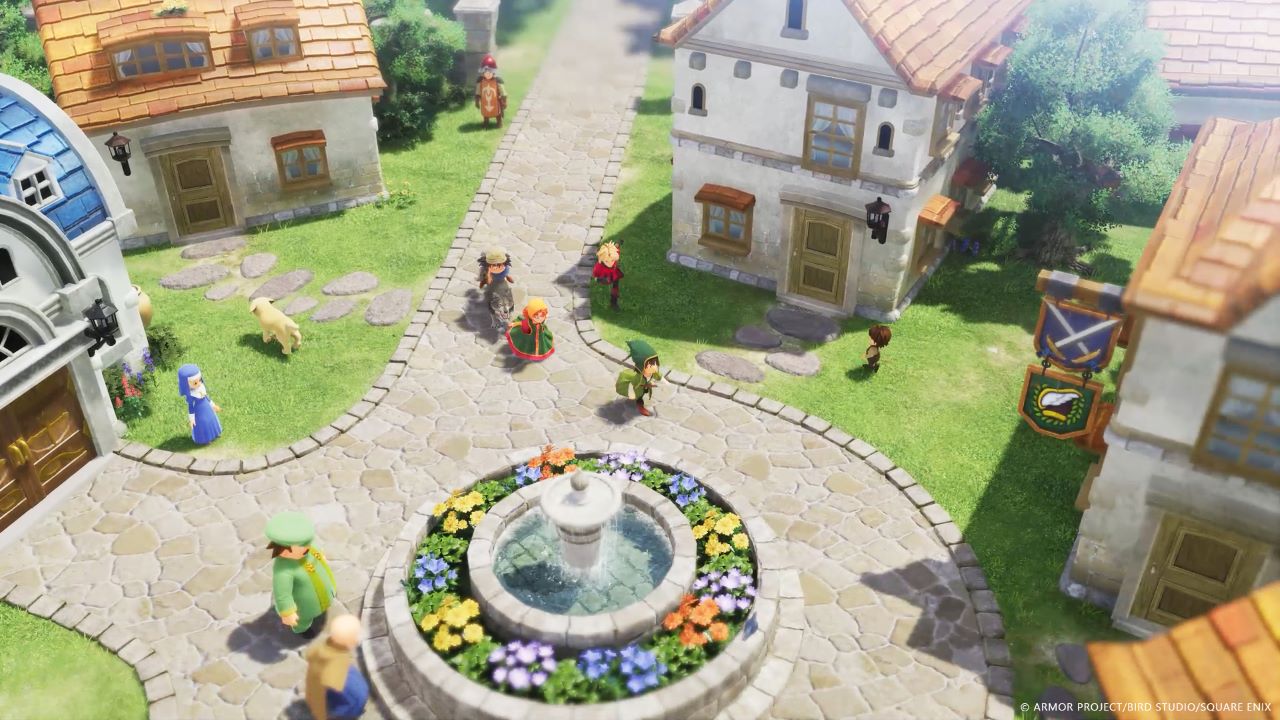
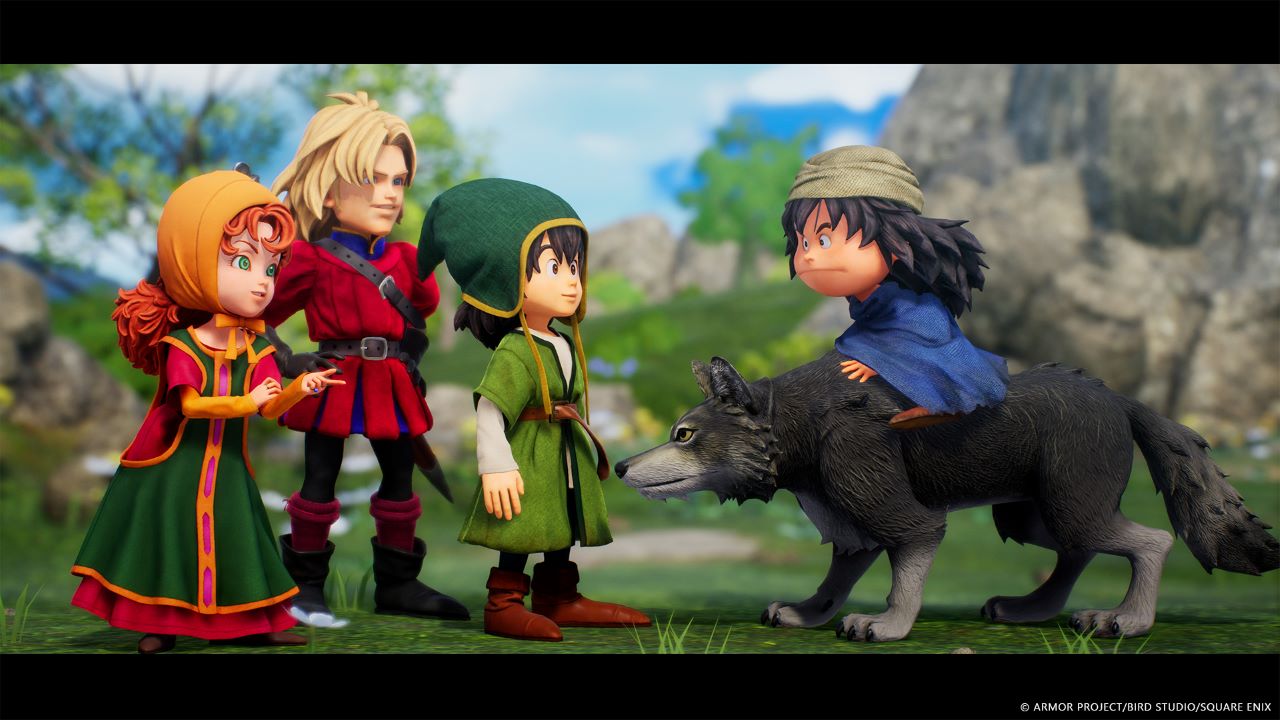
The Unreal Engine presentation does a tremendous amount of work here. Towns feel larger, environments more readable, and character models expressive in a way that bridges the gap between the game’s 1999 design and modern expectations. Importantly, the visuals never feel like they are trying to modernize the core experience. Instead, they make the deliberate pacing feel inviting rather than dated. This is not a remake attempting to reimagine Dragon Quest VII as something faster or louder. It is a remake that wants you to experience it as it always was, just without the friction.
What surprised me most was how quickly the slowness stopped feeling like slowness at all. After several hours, the rhythm of the game becomes natural. You stop checking the clock. Sessions stretch longer without feeling exhausting. There is a therapeutic quality to its repetition, something that feels increasingly rare in games designed around constant stimulation. Playing this while snowed in amplified that effect. With nowhere to go and nothing urgent demanding attention, Dragon Quest VII felt less like a game to be completed and more like a place to spend time. Its world became a routine, a comforting backdrop to days that otherwise felt frozen in place. Few modern games are built to accommodate that kind of relationship with the player.
This is where the remake’s true success lies. It doesn’t just update an old game for modern hardware; it recontextualizes an older design philosophy for an audience that may now be more receptive to it than ever before. Players who discovered the series through Dragon Quest XI will recognize the charm, the warmth, and the deliberate pacing, but here those qualities are distilled to their purest form. At the same time, the experience highlights the current tension within the genre. If revisiting the past feels this comforting, what does that mean for the future? The appeal of Dragon Quest VII is inseparable from its unapologetic resistance to modern design trends. It succeeds precisely because it refuses to hurry.
By the time the credits rolled, I didn’t feel the usual satisfaction of finishing a long RPG. Instead, I felt like I was leaving somewhere I had grown accustomed to visiting. That lingering attachment is rare, and it speaks to how powerful the game’s slow, vignette-driven structure can be when given the space to breathe. Dragon Quest VII may have begun life as one of the most intimidatingly long and oddly paced JRPGs of its era, but in this new form, it feels almost contemporary, not because it changed, but because the audience did.
Score: 8 out of 10
Reviewed on PlayStation 5