

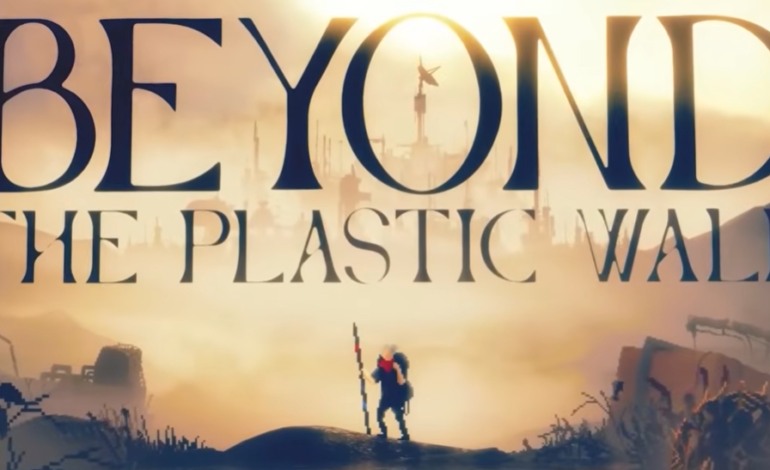
While the advancement of technology has historically allowed developers to transition from 2D to 3D games with more powerful engines, others have taken the opportunity to expand what 2D games can look like. This often involves using 3D art or layering to create 2D spaces for players to traverse. Titled “2.5D” in the most prevalent cases, this style of game is often praised for its artistry, a trend that seems to have continued with the newly announced Beyond the Plastic Wall. Developed and published by Motvind Studios, this puzzle adventure game takes a pixel character and places them in realistic locations.
The game’s announcement was accompanied by a trailer and a page on Steam. Players will control Hal, the recipient of letters from an unknown source. The goal of the game will be to travel to the sender at the edge of the world. Along the way, Hal will encounter signs of the broken world, including aged machines and lonely people in need of help. Providing these characters with answers to their problems is promised to carry Hal toward the woman who sent the letters at the last city. In the trailer, Hal can also be seen speaking over a long distance with his dad, though the responses he receives are not shown.
Most of the gameplay shown so far involves looking through the detailed world and using puzzle-solving skills to fit scattered pieces back where they belong. Each machine will provide a unique style of problem that players will need to think creatively to solve. Each location will also bring with it a unique atmosphere, such as the train station or massive industrial city.
The way a game looks can often mean more to the story than just how graphically impressive or beautiful it is. While the full details of the story are not yet available, the trailer for Beyond the Plastic Wall indicates that piecing together the 3D pieces of machines will help the 2D Hal come to a satisfying place in his own story. The game will be playable on Steam.
