 Paul David Nuñez September 11th, 2025 - 12:15 PM
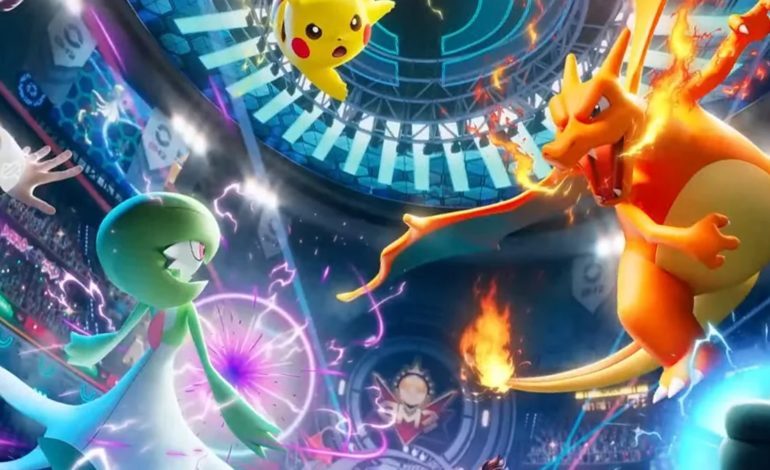
Nintendo, in case you weren’t aware, is very protective of its IP. However, as some may note, they may have taken things too far with their latest patent. U.S. patent 12,403,397 focuses on summoning and battling characters, a staple of games such as Pokémon, Digimon, Persona, and more. Following the approval from the United States Patent and Trademark Office, many IP lawyers have criticized the US patent system saying that it should not have happened.
Video game patent lawyer Kirk Sigmon says that these patents that the USPTO granted isn’t just a moment of questionable legal theory but an indictment of American patent law. “Broadly, I don’t disagree with the many online complaints about these Nintendo patents,” said Sigmon, whose opinions do not represent those of his firm and clients. “They have been an embarrassing failure of the US patent system.”
Sigmon says that the ‘397 patent and last week’s patent 12,409,387, which covers riding and flying systems similar to those Nintendo has been criticized for claiming in its Palworld lawsuit represent irregularities in the decision-making of US patent officials.
Talking with PC Gamer, Sigmon said that the ‘387 patent “got a bit of push-back, but barely. After its initial application was deemed invalid due to similarities to existing Tencent and Xbox-related patents, Nintendo amended its claims based on interviews with the USPTO, which then determined that the claims were allowable “for substantially the same reasons as parent application(s).”
“That parent case,” Sigmon said, “had an even weirder and much less useful prosecution history.”
Most of the claims made in the ‘387 patent’s single parent case, U.S. Pat. No. 12,246,255 were immediately allowed by the USPTO, which Sigmon said is “a very unusual result: most claims are rejected at least once.” When the claims were ultimately allowed, the only reasoning the USPTO offered was a block quote of text from the claims themselves.
“This seems like a situation where the USPTO essentially gave up and just allowed the case, assuming that the claims were narrow or specific enough to be new without evaluating them too closely,” Sigmon said. “I strongly disagree with this result: In my view, these claims were in no way allowable.”
The ‘397 patent suggests that any game making use of all of the mechanics listed could potentially trigger an infringement lawsuit from Nintendo:
“One, there must be a PC, console, or other computing device, and the game is stored on a drive or similar storage medium. Two, you can move a character in a virtual space. Three, you must be able to summon a character. They call it a “sub character” by which they mean it’s not the player character, but, for example, a little monster such as a Pokémon that the player character has at their disposal. Then the logic branches out, with items 4 and 5 being mutually exclusive scenarios, before reuniting again in item 6. Four, this is about summoning the “sub character” in a place where there already is another character that it will then (when instructed to do so) fight. Five, This alternative scenario is about summoning the “sub character” at a position where there is no other character to fight immediately.And six, This final step is about sending the “sub character” in a direction and then letting an automatic battle ensue with another character. It is not clear whether this is even needed if one previously executed step (4) where the “sub character” will basically be thrown at another character.”
IP expert Florian Mueller said that Nintendo “should never” have recieved a “summon character and let it fight” patent in the first place. According to Mueller, the problem is global. “The Japan Patent Office also granted Nintendo an outrageous patent,” he said. “They ‘amended’ one of the patents they’re using against Palworld in Japan. Outrageous stuff.”
Don McGowan, former chief legal officer at The Pokémon Company, believes the patent will likely be ignored. “I wish Nintendo and Pokémon good luck when the first other developer just entirely ignores this patent and, if those companies sue that developer, the developer shows decades of prior art,” he told Eurogamer, adding: “This isn’t Bandai Namco with the loading screen patent“.
The filing for such patent protection indicates that Nintendo does intend to pursue a legal strategy in defending itself against entrants in the pocket monster genre,” games industry lawyer Richard Hoeg told Eurogamer. “But that strategy may or may not involve lawsuits, as the ‘muddying of the waters’ effected by the patents existence may be enough to deter investment in and creation of competitors. That is, if Nintendo looks like it could pounce, that may be enough. No actual pouncing required.”
Play games, take surveys and take advantage of special offers to help support mxdwn.
Every dollar helps keep the content you love coming every single day.