
 Dylan McHugh December 17th, 2025 - 7:29 PM
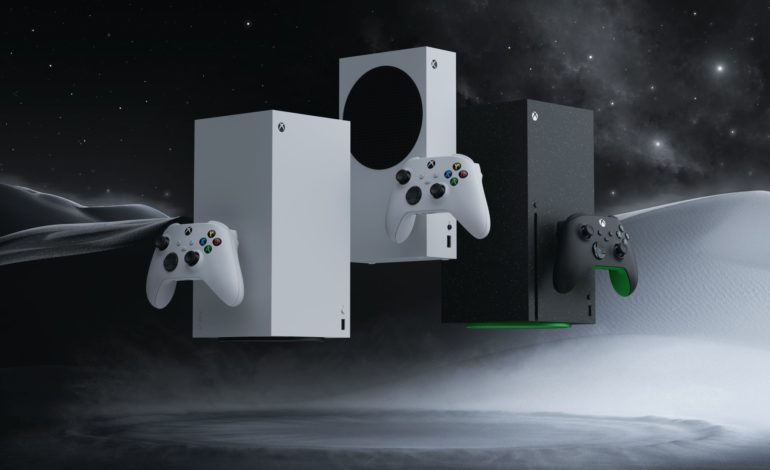
The latest U.S. sales data from Circana paints a stark picture for the video game hardware market. Console sales across the board are down sharply year over year, with Xbox hardware sales falling roughly 70%, PlayStation 5 sales down about 40%, and Nintendo Switch family sales declining around 10%. Traditionally the most important month of the year for console sales this has been one of those worst performing Novembers in decades.
Hardware – 1.6 million units of video game hardware across all platforms sold in the US during November, the lowest total for a November month since 1995 (1.4 million).
— Mat Piscatella (@matpiscatella.bsky.social) Dec 17, 2025 at 9:00 AM
Senior Director and Video Game Industry Thought Leader at Circana Mat Piscatella claimed on Bluesky that total consoles sold this past November only hit 1.6 millions units. This has been the lowest total for a November since 1995 only selling 1.4 million units. While the numbers are dramatic, the reasons behind them are less about a single failure and more about a convergence of economic pressure, pricing decisions, and long-term shifts in how people play games.
One of the clearest factors driving the decline is price. Console hardware has become more expensive mid-generation, an unusual move historically. Both Microsoft and Sony have raised prices on their consoles since launch. The PlayStation 5 now costs noticeably more than it did earlier in its lifecycle, and Xbox’s Series X and Series S have also seen price increases. Nintendo’s Switch 2 entered the market at a higher price point than the original Switch, further raising the barrier to entry for new buyers.

All of the graph information was sourced from: WBRC(Xbox Prices), PlayStation Blog(PlayStation Prices) and Nintendo Life(Nintendo Switch Prices)
US video game hardware total units sold and average price paid, Nov 1995 through Nov 2025.
— Mat Piscatella (@matpiscatella.bsky.social) Dec 17, 2025 at 10:30 AM
Another major contributor could be the age of the current console generation. The PlayStation 5 and Xbox Series X|S are now several years old, and the initial wave of early adopters has long since passed. Unlike earlier generations, there has been no dramatic hardware revision or must-have technical leap that makes existing consoles feel obsolete. For many players, the systems they already own still run new games well enough, reducing the urgency to upgrade or replace hardware.
Nintendo’s situation is slightly different, but still affected by timing. While new hardware has helped offset some of the decline, the broader market slowdown has limited how much that momentum can counteract overall weakness in consumer spending.
“.. The US economy is in a hiring recession. Almost no jobs have been added since April.
“Wage gains are slowing.
“710,000 more people are unemployed now versus November 2024.”
@byheatherlong.bsky.social
— Carl Quintanilla (@carlquintanilla.bsky.social) Dec 16, 2025 at 9:59 AM
This post on Bluesky that was reposted by Mat Pisacatella is from Carl Quintanilla an award winning American journalist. His evidence might help draw conclusions on why we are seeing a decrease in consoles being sold because of the current situation that the US economy is facing. Currently wage gains are slowing and 710,000 Americans are unemployed now compared to last year. At the same time, consumers are facing inflation, higher interest rates, and increased costs of everyday essentials. In that environment, spending several hundred dollars on a gaming console becomes easier to postpone especially for households that already own one.
Xbox’s roughly 70% decline stands out as the most severe, and it reflects deeper strategic changes. Microsoft has increasingly emphasized services over hardware, positioning Xbox Game Pass, cloud gaming, and PC integration as central pillars of its ecosystem. While this approach expands access to Xbox games, it also reduces the necessity of buying an Xbox console specifically. Players can engage with Xbox content through PCs, streaming devices, and even competing platforms, which naturally suppresses hardware demand. In effect, Microsoft’s strategy may be succeeding in growing engagement, but at the cost of traditional console sales
Beyond consoles themselves, the gaming market has evolved. Mobile gaming, live-service titles, subscriptions, and digital storefronts all allow players to spend more time gaming without purchasing new hardware. Additionally, some consumers are gravitating toward alternative experiences. Forms of alternatives would be retro gaming, handheld emulation devices, and lower-cost entertainment options rather than investing in premium consoles.
This shift doesn’t necessarily mean people are playing fewer games; it means they’re playing them differently. Perhaps the most concerning element of the Circana report is timing. November has traditionally driven massive hardware sales thanks to Black Friday and holiday promotions. This year, even with discounts and bundles, sales failed to rebound in a meaningful way. This information suggests that the issue isn’t simply delayed purchases, it’s reduced demand from gamers.
Play games, take surveys and take advantage of special offers to help support mxdwn.
Every dollar helps keep the content you love coming every single day.
